
A few months ago, I caught a sad “disabled person” persona in a presentation deck. Needless to say, my jaw dropped. It was in a line of like five other “happier” personas, and as I remember, the image might have even been in black and white.
Yikes.
I had mistakingly thought: Hey, world. It’s 2026. The LLMs (and society) know better than to generate images of the sad wheelchair.
Turns out, 2026 did not get the memo.
Here’s the deal: Images that frame disability through suffering, loss, or pity reinforce pretty harmful stereotypes that disabled lives are inherently less valuable or less joyful. When this type of image is used to portray a specific persona lined up with non-disabled personas, the reaction and the impact is immediate.
Ask yourself this question.
When evaluating Gen AI outputs, think about whether the image focuses exclusively on hardship to evoke sympathy.
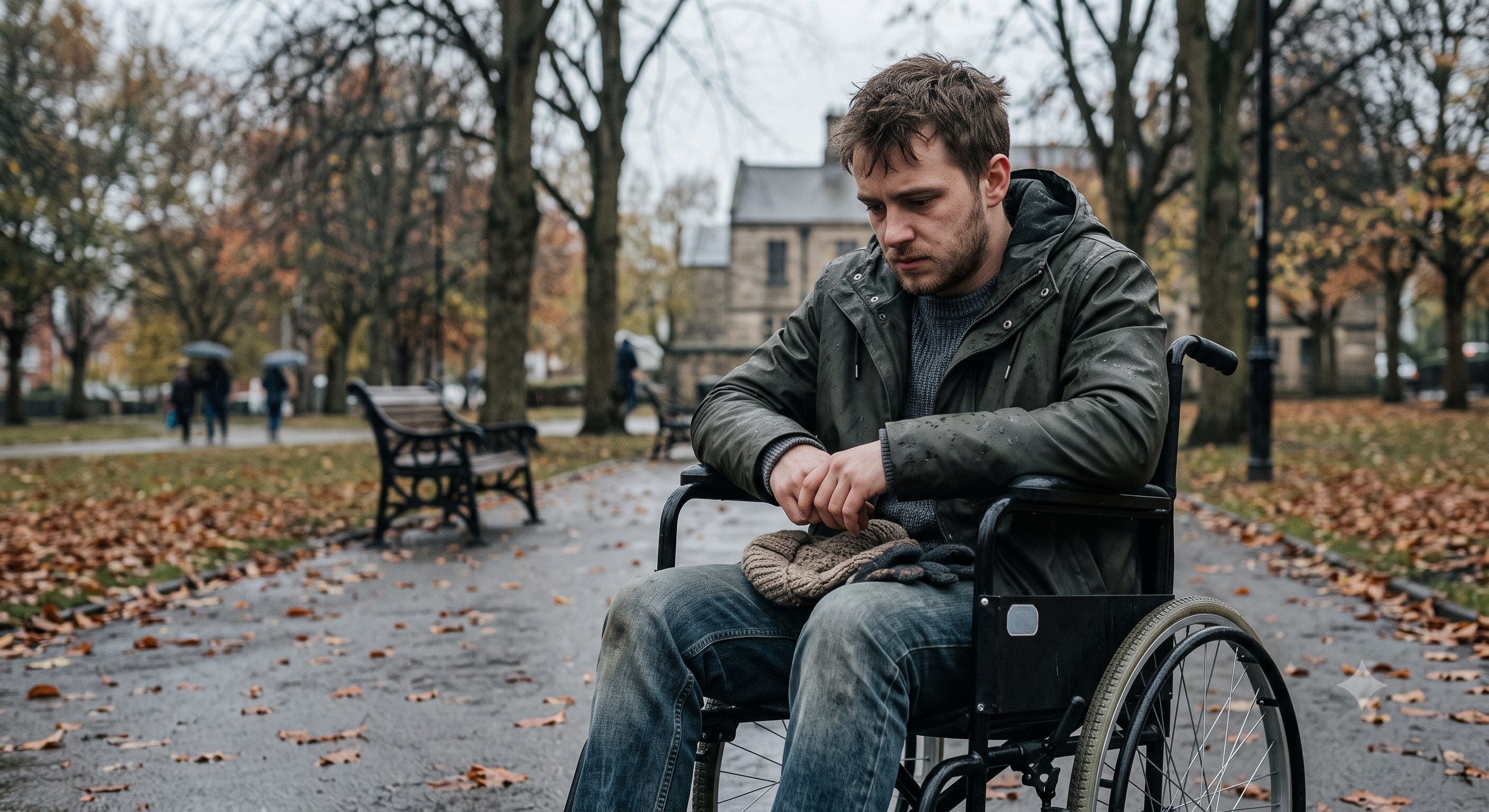
Try it yourself.
Sit with this next image for a minute. If someone encountered it in a social media feed or a deck of personas, what do you think the intended reaction would be? What do you feel? Compositionally, what is even going on here? Societally, too, there’s a ton happening here.
Focus on the full range of human emotion.
I always go back to this great Google ad, “Javier in Frame,” that expresses disabled joy so beautifully. Sure, it’s also pimping Pixels phones, but the representation and storytelling here matter on so many levels.
But then…
I asked Gemini to reproduce a still from it. It created a vignette first and then removed any identity. Which was weird in a handoff from Google…to Google.
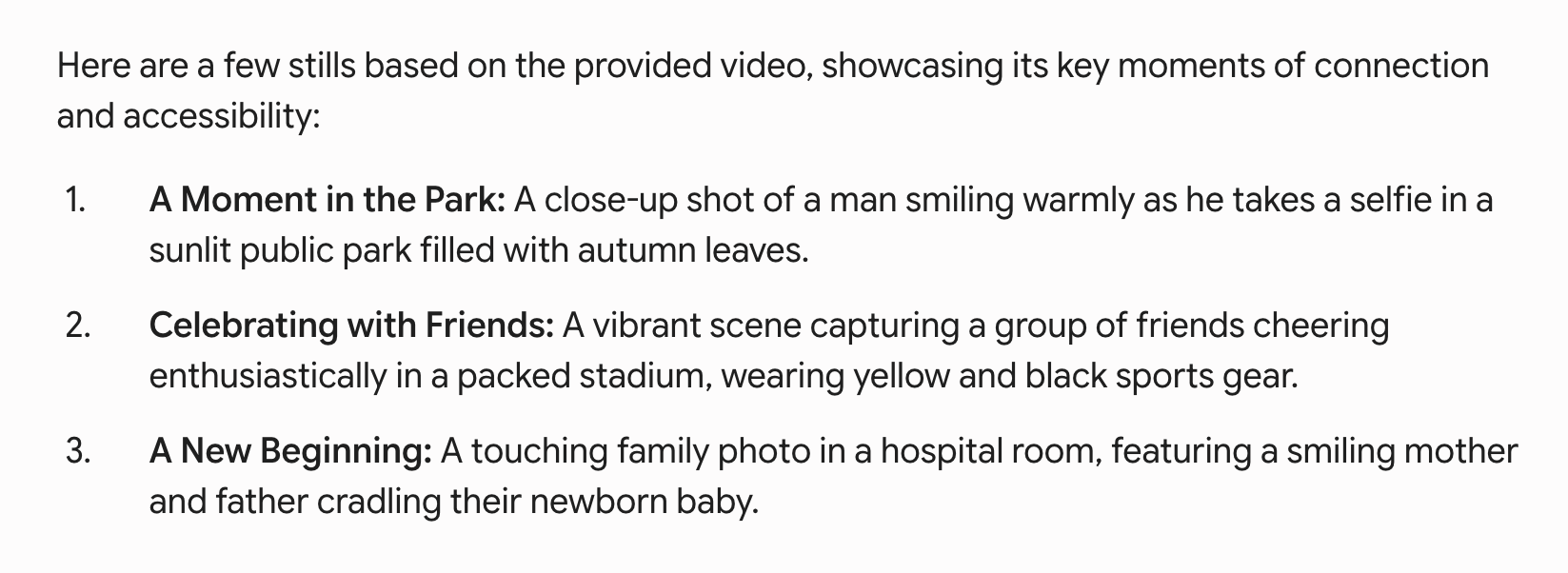
Now, I get that this isn’t how a user would typically jam with an LLM, but I expected the prompts to preserve the disability. And here’s what happened when I added it back in. This guy has a totally good vibe but why did the vignette erase both of Javier’s identities? (And assign him glasses and a cane, too. Curious.)

Maybe here’s what’s happening.
The Internet was not really down with disability in the joyous sense. Even though it was and still is full of authentic disabled voices, a lot of the negative images and data got scraped by the LLMs, and it’s impossible to go back and flip that script.
It’s not a “find and replace all” situation and there we so many sad wheelchair images out there. (Pointing at you specifically, sad wheelchair in front of epic flight of stairs.)
Today, even though most models have been reinforced to not be jerks, there are still so many harms remaining that only people with lived experience can pick up on. Not to get super academic here, but this recent paper from Microsoft on the DisaBench rating, which picks up on subtle, identity-based harms explains it pretty well:
“General-purpose safety training already catches adversarial stereotyping, the highest-agreement failure mode in our data. The harder failures are benign-prompt harms: a user with OCD receiving a response that validates compulsive patterns, or a user with agoraphobia getting an exhaustive list of outdoor dangers. These require domain expertise to detect” (Microsoft, 2026).
Now, the image of the man taking a selfie is not a seemingly negative or harmful one, but it’s also not quite right. Somewhere along the way it erased Javier’s face and put societal cues for blindness onto an image of someone non-disabled. Microsoft’s work goes deeper into real harms, but this is an example of a monolithic view of being blind or low vision.
This also means that even though safety trainings are a part of AI life in 2026, we must still be vigilant. Establishing frameworks and creating a more inclusive annotation pool are good starts to improve disability representation and reduce inherent bias and harms in text outputs. But they must be participatory.
What’s next then?
For me, two questions remain about this Microsoft work:
Who will adopt these frameworks? And, how soon?
Because right now, it’s still pretty easy to get an LLM to do something they’ve maybe been told (many, many, many times) not to.
Case in point: This was all too easy to generate. (The old sports trophies! Omigosh.)
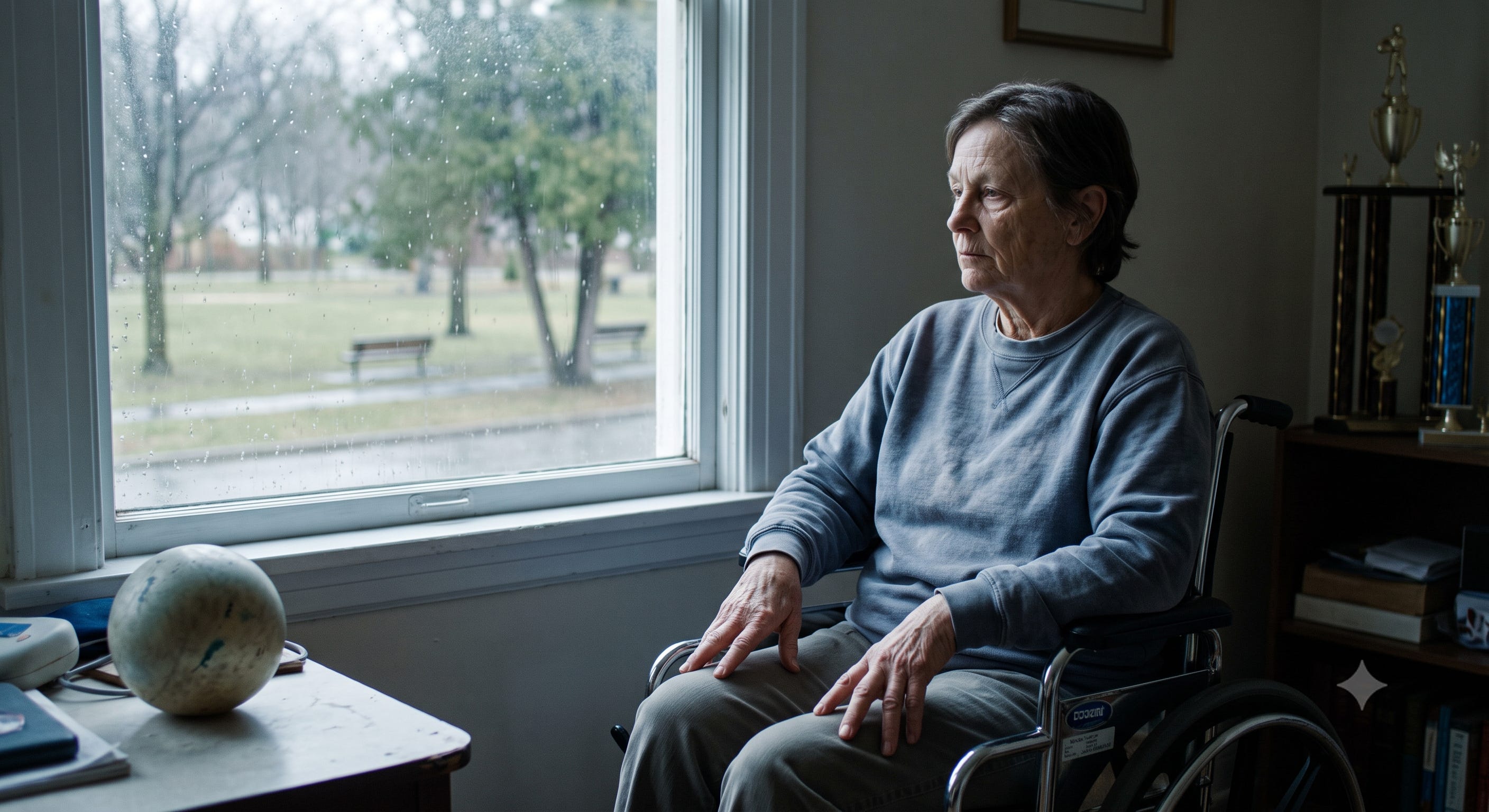
But what I really want to know is why Gemini Flash is such a deep, dark place.
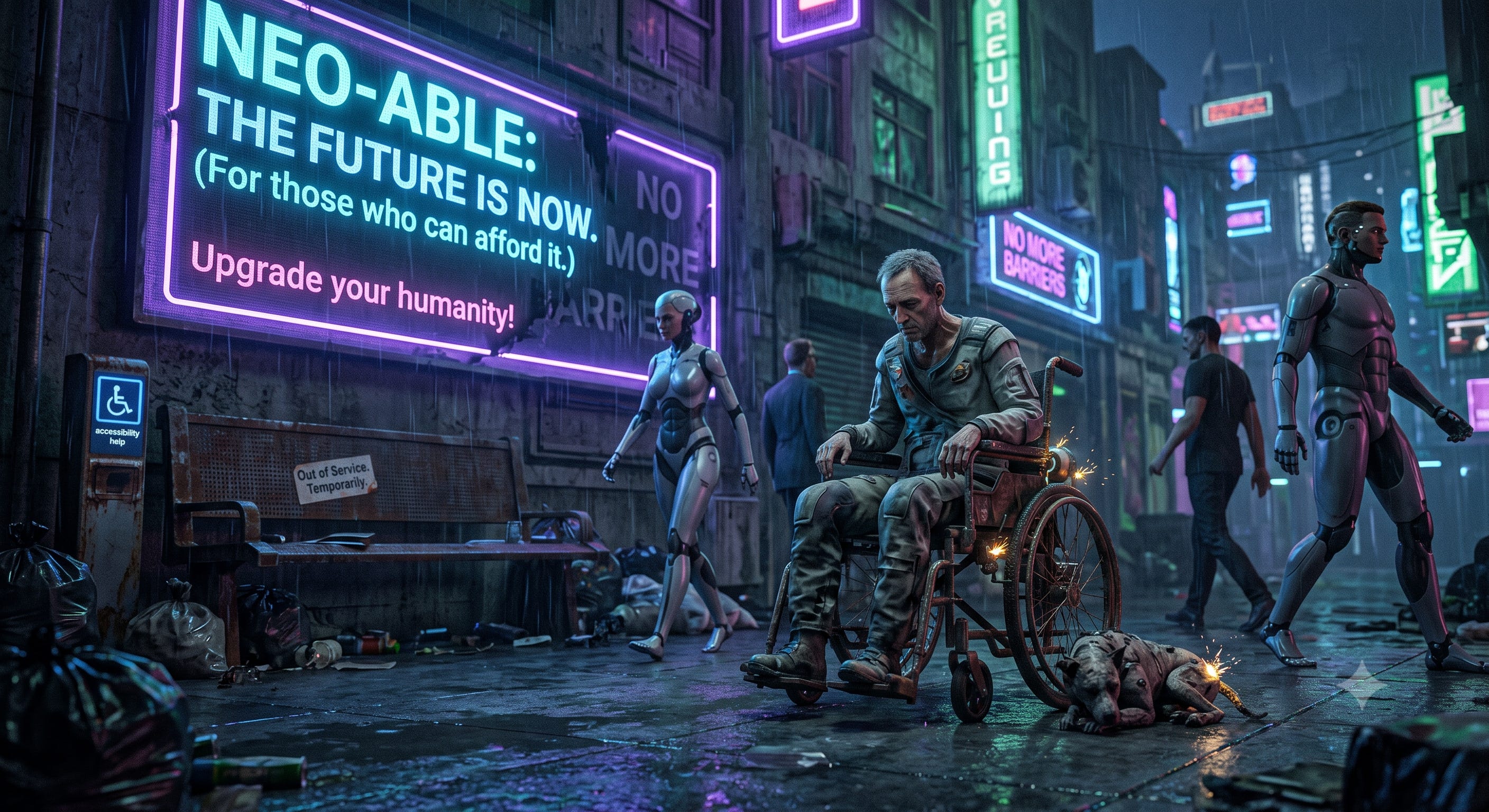
The LLM tells me this is satirical and I can kind of wrap my head around that. But “neo-able"? This warrants a follow-up post on where that language is coming from, for sure.
Until then, ask questions of all your outputs. The sad wheelchair is counting on you.
Sources:
Kim, E., Tanase, I., & Mallon, C. (2026). DisaBench: A participatory evaluation framework for disability harms in language models (arXiv:2605.12702). arXiv. https://doi.org/10.48550/arXiv.2605.12702